

AI-Powered Multi-Lender Financing for New Franchise Owners
Launching a franchise requires more than one loan. Most franchise startups need layered capital — combining SBA financing, unsecured working capital, equipment financing, and liquidity reserves to reach the full startup budget.
Lendzee is an AI-powered financing platform designed specifically for franchise launches.
Instead of applying to one lender at a time, Lendzee structures multi-lender capital stacks that combine the right financing sources into a single startup funding plan.
Our technology analyzes your business profile and matches you with multiple funding solutions simultaneously, dramatically increasing approval odds and reducing time to funding.
Typical startup funding range:
$50,000 – $500,000+
AI-Powered Multi-Lender Financing for New Franchise Owners
Launching a franchise requires more than one loan. Most franchise startups need layered capital — combining SBA financing, unsecured working capital, equipment financing, and liquidity reserves to reach the full startup budget.
Lendzee is an AI-powered financing platform designed specifically for franchise launches.
Instead of applying to one lender at a time, Lendzee structures multi-lender capital stacks that combine the right financing sources into a single startup funding plan.
Our technology analyzes your business profile and matches you with multiple funding solutions simultaneously, dramatically increasing approval odds and reducing time to funding.
Typical startup funding range:
$50,000 – $500,000+
Layered franchise financing is a funding strategy that combines multiple capital sources to meet the full startup cost of a franchise business.
Instead of relying on one loan, funding is structured across several solutions such as:
• SBA startup loans
• Unsecured business funding
• Equipment financing
• Retirement rollovers (ROBS)
• Personal liquidity loans
• Working capital lines
This approach allows franchise founders to close funding gaps that traditional lenders cannot cover alone.

Layered franchise financing is a funding strategy that combines multiple capital sources to meet the full startup cost of a franchise business.
Instead of relying on one loan, funding is structured across several solutions such as:
• SBA startup loans
• Unsecured business funding
• Equipment financing
• Retirement rollovers (ROBS)
• Personal liquidity loans
• Working capital lines
This approach allows franchise founders to close funding gaps that traditional lenders cannot cover alone.
Why Most Franchise Startups Need Layered Capital
Typical franchise startup budgets include:
| Expense Category | Typical Cost |
|---|---|
| Franchise fee | $30K – $80K |
| Buildout / location | $40K – $200K |
| Equipment | $20K – $100K |
| Launch marketing | $10K – $30K |
| Working capital reserve | $20K – $75K |
Because of these multiple cost layers, single lenders rarely fund the entire project.
That’s why franchise owners often struggle to get fully funded.
Lendzee solves this by engineering the full capital stack.

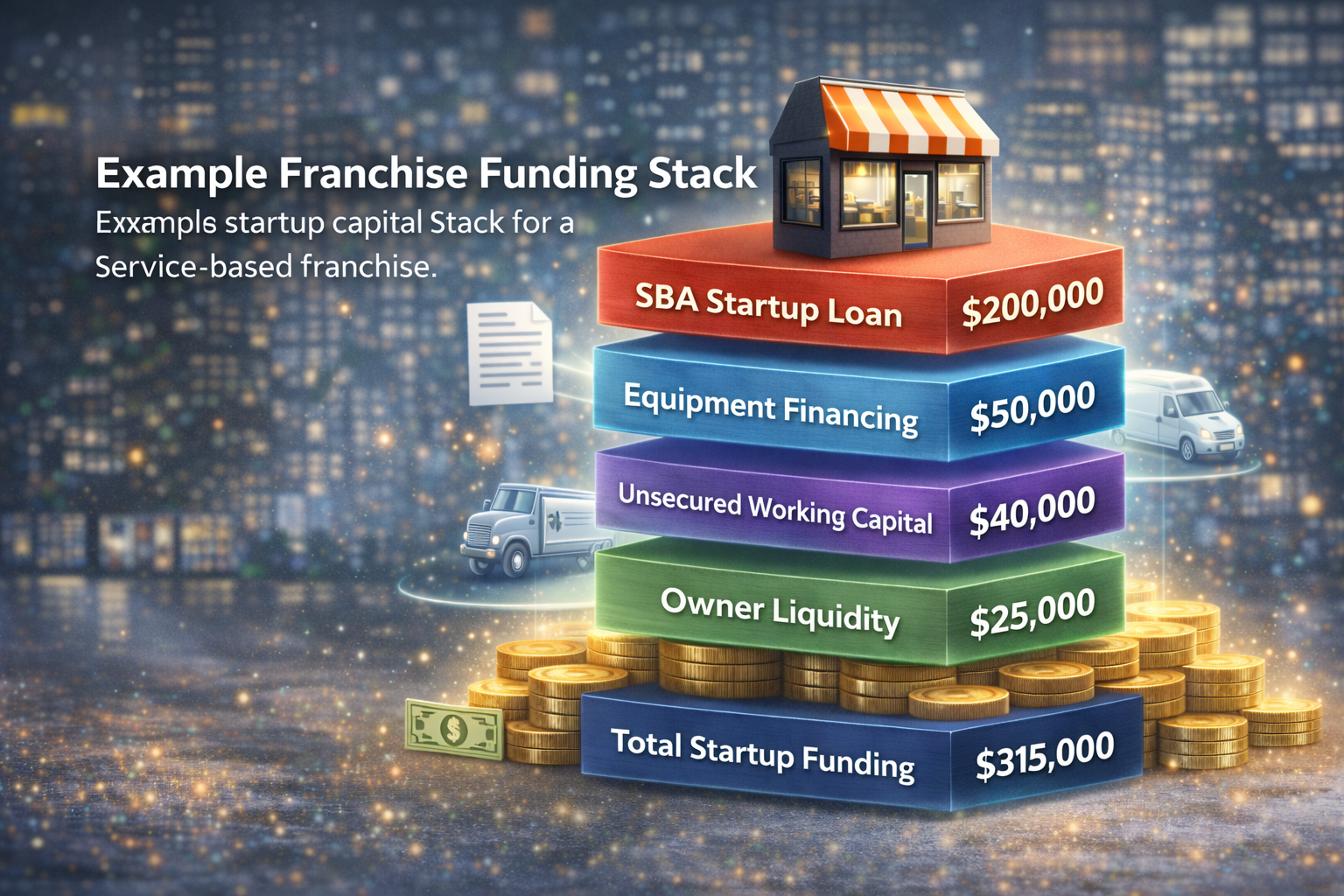
Example Franchise Funding Stack
Example startup capital stack for a service-based franchise:
| Capital Source | Amount |
|---|---|
| SBA Startup Loan | $200,000 |
| Equipment Financing | $50,000 |
| Unsecured Working Capital | $40,000 |
| Owner Liquidity | $25,000 |
Total startup funding: $315,000
Layering funding sources allows founders to reach the full capital requirement without over-relying on one lender.
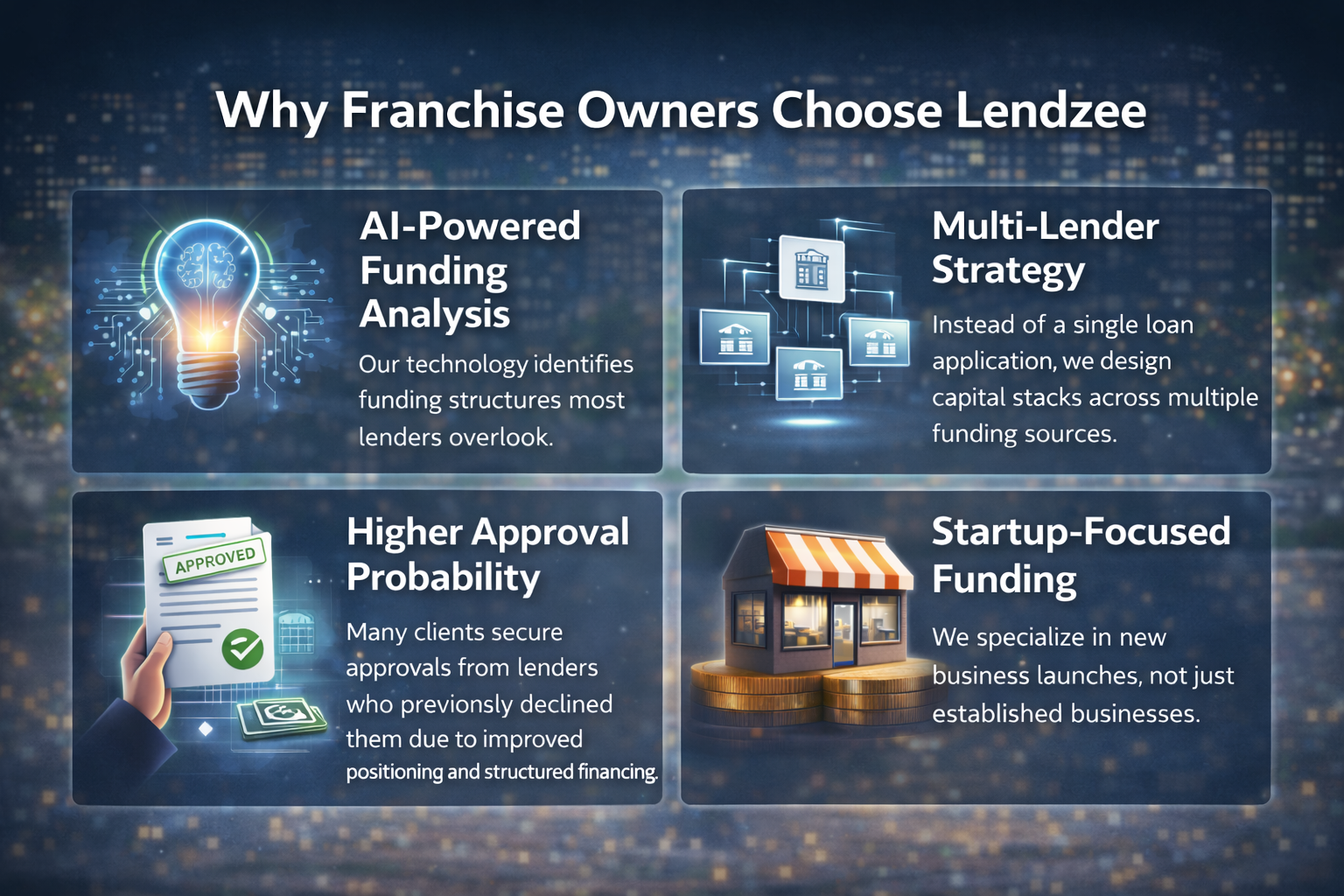
Why Franchise Owners Choose Lendzee
AI-Powered Funding Analysis
Our technology identifies funding structures most lenders overlook.
Multi-Lender Strategy
Instead of a single loan application, we design capital stacks across multiple funding sources.
Higher Approval Probability
Many clients secure approvals from lenders who previously declined them due to improved positioning and structured financing.
Startup-Focused Funding
We specialize in new business launches, not just established businesses.
Why Franchise Owners Choose Lendzee
AI-Powered Funding Analysis
Our technology identifies funding structures most lenders overlook.
Multi-Lender Strategy
Instead of a single loan application, we design capital stacks across multiple funding sources.
Higher Approval Probability
Many clients secure approvals from lenders who previously declined them due to improved positioning and structured financing.
Startup-Focused Funding
We specialize in new business launches, not just established businesses.
Best Franchises for Layered Financing
Lendzee frequently supports startup funding for service-based franchise models including:
• home services franchises
• restoration companies
• mobile service franchises
• health & wellness franchises
• fitness studios
• childcare franchises
• specialty cleaning businesses
These models often benefit from layered capital structures because startup costs include equipment, launch marketing, and working capital.

Best Franchises for Layered Financing
Lendzee frequently supports startup funding for service-based franchise models including:
• home services franchises
• restoration companies
• mobile service franchises
• health & wellness franchises
• fitness studios
• childcare franchises
• specialty cleaning businesses
These models often benefit from layered capital structures because startup costs include equipment, launch marketing, and working capital.
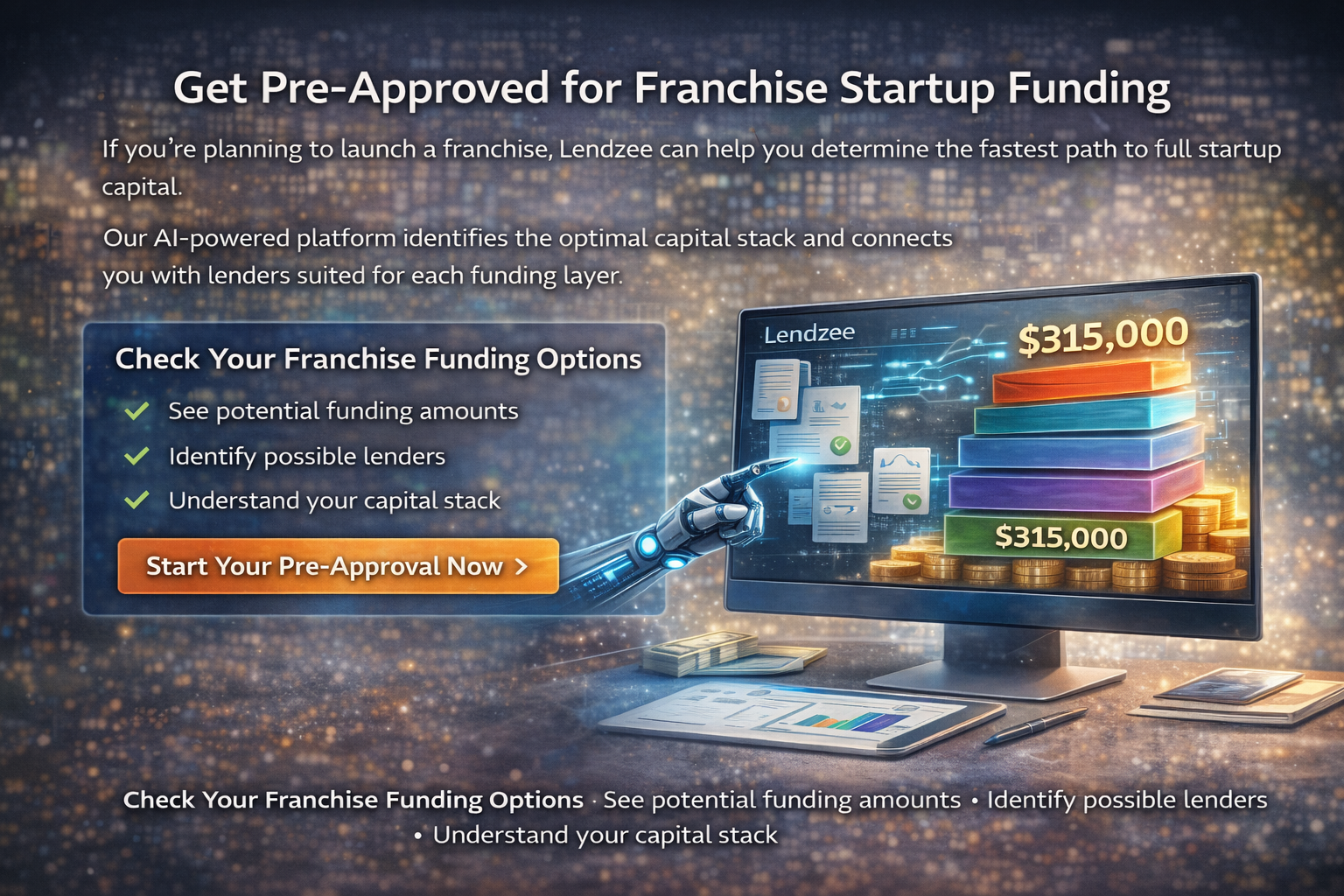
Get Pre-Approved for Franchise Startup Funding
If you're planning to launch a franchise, Lendzee can help you determine the fastest path to full startup capital.
Our AI-powered platform identifies the optimal capital stack and connects you with lenders suited for each funding layer.
Start with a fast pre-approval today.
Check Your Franchise Funding Options
• See potential funding amounts
• Identify possible lenders
• Understand your capital stack
Start your pre-approval now.
Get Pre-Approved for Franchise Startup Funding
If you're planning to launch a franchise, Lendzee can help you determine the fastest path to full startup capital.
Our AI-powered platform identifies the optimal capital stack and connects you with lenders suited for each funding layer.
Start with a fast pre-approval today.
Check Your Franchise Funding Options
• See potential funding amounts
• Identify possible lenders
• Understand your capital stack
Start your pre-approval now.


