
Multi-Lender Layered Financing for Franchises: A Complete Guide for Service-Based Startups
Mar 23, 2026, 1:42:45 PM
Written By:
Lendzee Team
Summary
Service-based franchise startups often face a major challenge: securing enough capital to launch and scale. Traditional funding alone rarely covers the full cost. That’s where multi-lender layered financing comes in.
This guide explains how franchisees can combine SBA loans and alternative funding, what questions to ask providers, and how to choose a reputable lender network marketplace to fund their business with confidence.
What Is Multi-Lender Layered Financing?
Multi-lender layered financing is a strategy where multiple funding sources are combined into a single capital stack to fully fund a franchise startup.
Instead of relying on one lender, franchisees can “layer” capital from:
- SBA loans
- Term loans from alternative lenders
- Lines of credit
- Equipment financing
- ROBS (Rollovers for Business Startups)
This approach is especially powerful for service-based franchise startups, where total startup costs often exceed what a single lender is willing to provide.
Why Franchise Startups Need Layered Capital
Most service-based franchises require:
- Franchise fees: $20K–$60K
- Buildout and equipment: $50K–$150K
- Working capital: $30K–$100K
Traditional SBA loans may:
- Cap out below total project cost
- Require equity injection (10–20%)
- Take 30–90+ days to close
Layering capital solves this by:
- Filling funding gaps
- Reducing time to launch
- Increasing approval odds
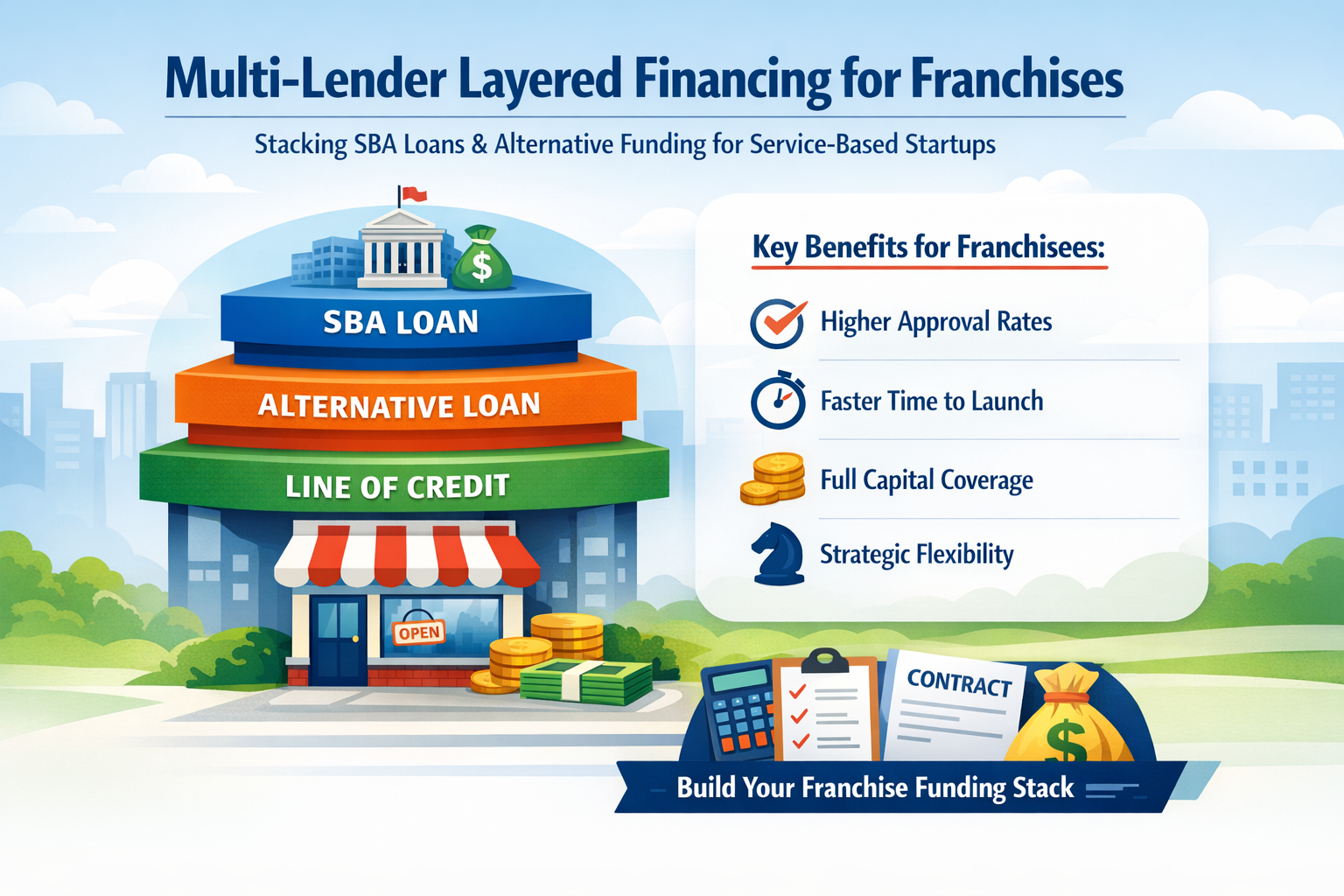
How SBA and Alternative Lending Work Together
A common stacked capital financing structure looks like this:
1. SBA Loan (Primary Layer)
- Covers 50–80% of total project cost
- Offers low rates and long terms
- Slower approval process
2. Alternative Term Loan (Secondary Layer)
- Fills gaps SBA won’t cover
- Faster funding (days vs. months)
- Higher interest but shorter term
3. Line of Credit (Flex Layer)
- Provides working capital cushion
- Helps manage early cash flow
4. Optional Add-Ons
- Equipment financing
- Business credit cards
- ROBS (for equity injection)
👉 The key is structuring these layers correctly so they don’t conflict with each other’s underwriting requirements.
Benefits of Multi-Lender Financing for Franchisees
✅ Higher Approval Rates
If one lender declines part of the deal, others can fill the gap.
✅ Faster Time to Launch
Alternative lenders can fund quickly while SBA is still processing.
✅ Full Capital Coverage
Ensures you’re not underfunded—a major reason franchises fail early.
✅ Strategic Flexibility
Different funding types serve different purposes.
What to Ask Multi-Lender Platforms
Not all lender network marketplaces are created equal. Before choosing one, ask:
1. Do you structure deals or just refer lenders?
Many platforms simply pass your application to multiple lenders.
You want a provider that actively structures layered financing.
2. How do you prevent lender conflicts?
Poor structuring can:
- Kill SBA approvals
- Over-leverage your business
- Create repayment issues
3. Do you work for me or the lenders?
Some platforms are paid by lenders, not applicants.
This can bias recommendations.
👉 Ideally, you want a partner aligned with your success—not commissions.
4. What types of lenders are in your network?
Look for access to:
- SBA lenders
- Non-bank lenders
- Franchise-friendly funding partners
5. Do you support me after funding?
The best providers offer:
- Ongoing advisory
- Refinance strategies
- Growth capital planning
How to Choose a Reputable Lender Network Marketplace
When evaluating options for startup funding for franchisees, look for:
🔍 Transparent Fee Structure
Avoid hidden fees or unclear compensation models.
🧠 Strategic Advisory (Not Just Matching)
You want a capital strategy, not just loan offers.
🏢 Franchise Expertise
Franchise financing is different from general small business lending.
⚙️ Technology + Human Support
The best platforms combine:
- AI-driven matching
- Hands-on deal structuring
⭐ Proven Track Record
Look for:
- Case studies
- Approval success rates
- Real client outcomes
Common Mistakes to Avoid
❌ Relying on One Lender
This limits your options and reduces approval chances.
❌ Overleveraging Too Early
Stacking capital incorrectly can hurt long-term cash flow.
❌ Choosing Speed Over Structure
Fast money isn’t helpful if it blocks better financing later.
❌ Ignoring Working Capital Needs
Many franchisees underestimate how much runway they need.
Real-World Example of Layered Financing
A service-based franchise startup needed $150,000:
- SBA loan: $90,000
- Alternative term loan: $40,000
- Line of credit: $20,000
Result:
- Fully funded launch
- Working capital buffer
- Faster opening timeline
Without layering, they would have been underfunded or delayed.
Final Thoughts: Building the Right Capital Stack
Multi-lender layered financing for service-based franchise startups is no longer a niche strategy—it’s becoming the standard.
The difference between success and struggle often comes down to:
- How your capital is structured
- Who helps you structure it
If you’re launching a franchise, think beyond “getting approved” and focus on building a complete, strategic funding stack.
Key Takeaways
- Layering SBA and alternative lending helps fully fund franchise launches
- A structured capital stack reduces risk and improves cash flow
- Not all lender marketplaces provide true advisory support
- Choosing the right partner is just as important as choosing the right funding
.png?width=500&height=1000&name=Blog%20Ad%20Apply%20Today%20(3).png)


